
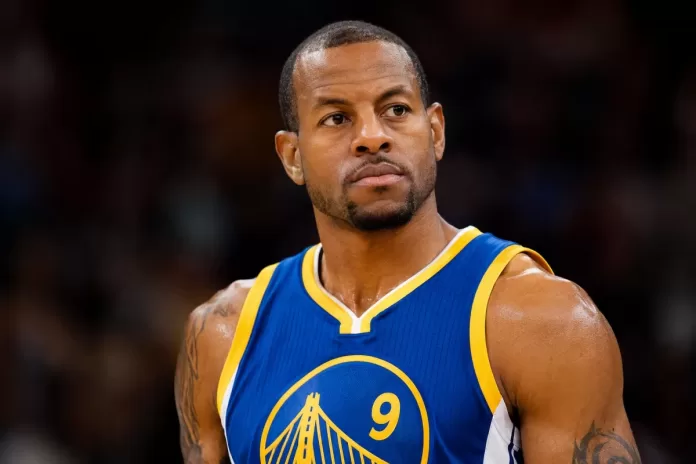
Former NBA player Andre Iguodala revealed that he once turned down a $60 million contract extension because he believed his statistical production justified a deal worth at least $80 million.
Iguodala, who spent 19 seasons in the NBA, explained that he studied his performance numbers and compared them with those of other players to determine his value during contract negotiations.
Although he did not consider himself a maximum-contract player, Iguodala believed his contributions in several statistical categories placed him among the league’s most valuable players.
“When I came out, or I’m going into my free agency, I’m not a max guy. But I’m comparing all my good numbers, how many games I’m winning based on the team I’ve got, how many points, assists and rebounds combined, I’m in the top five in the league, steals I’m always top five in the league.”
The four-time NBA champion emphasized that players need to understand their market value before entering negotiations, especially when teams are attempting to secure their services for the lowest possible price.
“You’ve got to be able to pull different numbers to put yourself in the position because you’re negotiating. You’re negotiating, man, and they’re trying to pay you as little as possible.”
Iguodala recalled rejecting a $60 million extension because he believed he deserved another $20 million. He also described an exchange with an equipment manager who questioned whether he actually needed that much money.
“I remember I had the equipment manager like, ‘Man, why are you asking for so much money?’ I remember I turned down $60 million on my extension. Sixty was like 200 now, it was just 60 back then. I turned it down because I’m like, ‘Nah, I’m worth 80. Eighty at least.’ And the equipment manager was like, ‘Well, do you need all that money?’ I said, ‘Well damn, bro.’”
According to Iguodala, seeking a larger contract can quickly change how a player is treated by people within an organization and its supporters.
He explained that players who previously enjoyed positive relationships with staff members and fans can suddenly face criticism simply for negotiating a higher salary.
“That’s how your interactions become with people you work with, with the fans. The minute you start negotiating, you go from being the best-liked person to now the narrative starts, burning jerseys kicks in, and nobody knows what the hell is going on.”
Iguodala also remembered conversations with a coach and general manager who suggested that he should be less concerned about his salary because he had already managed his finances successfully.
“I used to joke with the coach and the GM of one of my teams. They’re my guys too. They would be like, ‘Hey Andre, you’re not one of the guys that cares about money. You handled your business well, and you’re doing well off the court. Do you need…’ And I’m looking like, ‘Wait, what?’”
However, Iguodala questioned that reasoning after seeing those same individuals negotiate their own contracts and receive the maximum compensation available to them.
“Then what happens when both of their contracts expire? Both of them got the max. The coach and the GM. I’m like, ‘I thought we didn’t care about money. I thought y’all were doing good. What happened?’”