

The NBA has long been a guards’ league, but the 2025–26 season has pushed that idea further than ever. Offenses now revolve around ball-dominant creators who control possessions, set tempo, and decide games late.
For player props, that shift matters, as usage rate, minutes, and role clarity today often carry more weight than traditional matchup narratives.
Some guards are carrying historic workloads. Others are benefiting from injuries, roster changes, or stylistic trends that quietly inflate their stat lines. Understanding which stars sit at the center of these changes can help explain why certain player props move the way they do night after night.
Luka Dončić: The Anchor of the Lakers’ Offense
Luka Dončić’s move to Los Angeles reshaped both the Lakers and the league’s prop landscape. Since arriving, he has become the unquestioned engine of the offense, carrying the highest usage rate in the NBA at nearly 37% while leading the league in scoring. Every half-court possession seems to bend around his decision-making.
That gravitational pull creates consistency across multiple stat categories. Dončić’s scoring sits comfortably in the mid-30s on many nights, but his rebounding and assist numbers remain just as important.
Improved conditioning has kept his minutes steady, and the presence of a reliable roll partner has boosted his assist opportunities.
From a prop perspective, his profile highlights how all-around involvement can stabilize outcomes. Even on nights when his shot cools slightly, volume and responsibility keep his overall production intact.
MORE FOR YOU
Primary prop areas tied to Dončić include:
- Points and points-based combos,
- Points plus rebounds,
- Full stat-line combinations that reward multi-category impact.
Taken together, Dončić’s workload makes his nightly production less about matchup swings and more about the sheer weight of responsibility he carries.
Shai Gilgeous-Alexander: The Offensive Compass
Shai Gilgeous-Alexander plays a different game. Where Dončić overwhelms defenses with orchestration, SGA applies pressure through precision. As the reigning MVP, he remains the Thunder’s offensive compass, and injuries to secondary creators have only expanded his role.
What separates Gilgeous-Alexander is how he scores. His ability to draw contact and live at the free-throw line turns aggression into efficiency. Over recent stretches, his free-throw attempts have spiked, and that steady parade to the line props up his scoring floor even in tight defensive games.
Prop markets have responded by regularly pushing his points lines into the low 30s. Big scoring performances tend to accelerate short-term movement, but the underlying driver remains the same. When his minutes climb, and the ball stays in his hands, pressure follows.
Cade Cunningham: The League’s New Assist Engine
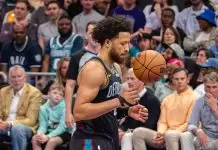
Few stories have surprised observers more than Cade Cunningham’s rise as the NBA’s most prolific facilitator. Detroit’s turnaround has coincided with his evolution into a true dual-threat guard, leading the league in assists while still averaging over 25 points per game.
Cunningham’s role is as clean as it gets. He initiates nearly every offensive set, plays heavy minutes, and closes games with the ball in his hands. That clarity makes assist-based props especially attractive, as his passing volume rarely fluctuates with matchup or game flow.
This is also where combo markets come into focus. Points-plus-assists lines reflect Cunningham’s balanced responsibilities and provide a clearer picture of his nightly workload, especially for a guard who scores and facilitates at a high level without relying on one category alone.
Conversations around how these markets are structured often lead readers to resources listing current NBA player prop odds. This information illustrates how high-usage guards like Cunningham are priced across both scoring and playmaking categories, aligning closely with on-court reality rather than short-term hype.
Anthony Edwards: Pace, Power, and Perimeter Volume
Anthony Edwards has embraced his role as Minnesota’s offensive anchor. His scoring average has climbed near 30 points per game, driven by confidence, shot volume, and a green light from the perimeter. Edwards thrives in rhythm, and few guards take as many high-difficulty threes off the dribble.
Pace plays a quiet but important role here. Against faster opponents, extra possessions create more opportunities for three-point attempts and secondary stats like rebounds. Even modest efficiency nights can turn productive when volume stays high.
Bettors often watch how Edwards’ environment shapes his output. Close games keep him on the floor. Up-tempo matchups increase his chances to play multiple roles. Those contextual factors frequently matter more than the opposing defender assigned to him.
Key factors that tend to boost Edwards’ stat lines include:
- High-possession games,
- Elevated three-point volume,
- Heavy fourth-quarter usage in tight contests.
When pace, volume, and late-game trust align, Edwards’ production tends to follow regardless of how efficiently the shots fall.
League-Wide Guard Trends Shaping Player Props
Beyond individual stars, broader trends continue to impact guard props across the league. Injuries remain one of the biggest drivers. When a primary scorer or facilitator sits, remaining guards often absorb both usage and minutes, creating short-term spikes that season averages fail to capture.
Combo props have also gained popularity for a reason. By bundling points, rebounds, or assists, these lines smooth out volatility and reward players who contribute in multiple ways. They are especially effective in high-pace games or spotlight matchups where stars log extended minutes.
Scheduling factors also shouldn’t be ignored. Back-to-back games and long travel stretches subtly impact efficiency, even when minutes stay high. Keeping up with NBA news and player trends helps bettors understand when fatigue or rotation tightening might influence guard production beyond what the box score shows.
The Shape of Guard Play in 2026
The common thread among these stars is responsibility. Luka Dončić, Shai Gilgeous-Alexander, Cade Cunningham, and Anthony Edwards all operate at the center of their teams’ identities. Their workloads are predictable, their minutes are secure, and their influence stretches beyond a single stat column.
For bettors, that stability is valuable. Player props anchored in role and usage tend to be more transparent than those driven by narrative alone.
As the league continues to lean into guard-led basketball, understanding how these players shape games offers a clearer lens for evaluating expectations throughout the season.