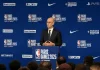

The NBA has pushed back against claims that its second-apron rules are hurting lower- and middle-income players, arguing that salaries across the league have increased since the system was introduced.
In a statement posted on Friday, October 9, the league disputed recent reports suggesting that the second apron has negatively affected players outside the highest salary brackets.
“Recent reports asserted that the second apron is hurting ‘lower’ and ‘middle’ class players. That’s untrue,” the NBA wrote.
“Since the implementation of the second apron, the number of players on team rosters has remained the same and annual salaries have increased by nearly $1.3 billion resulting in pay increases of approximately 30% for all classes of players.”
The league used roster numbers and aggregate salary growth to argue that the stricter financial restrictions imposed on high-spending teams have not reduced opportunities or earnings for players across the NBA.
The second apron is part of the NBA’s collective bargaining system and imposes additional restrictions on teams whose payrolls exceed a specified threshold above the salary cap. Those restrictions are designed to discourage excessive spending and limit the advantages available to teams operating well above the league’s financial limits.
MORE FOR YOU
Critics have argued that the rules can make it harder for expensive teams to retain supporting players, particularly veterans and role players who might otherwise receive competitive contracts. Restrictions on trades and other roster-building mechanisms can also influence how teams construct their benches.
The NBA’s statement directly challenged the broader claim that these rules have reduced compensation for lower- and middle-income players. However, the league’s figures do not necessarily establish how salaries have changed for every individual player or salary category.
The 2026 offseason featured several significant extensions and free-agent agreements, including deals for players outside the league’s highest salary tier.
Donovan Mitchell agreed to a four-year maximum extension with the Cleveland Cavaliers worth $272.9 million, while Victor Wembanyama signed a five-year maximum extension with the San Antonio Spurs worth $252.3 million. Trae Young also secured a four-year, $212.8 million extension with the Washington Wizards.
Meanwhile, several players received substantial contracts that illustrate the market for contributors beyond the league’s biggest stars. Quentin Grimes agreed to a four-year, $60 million deal with the Los Angeles Lakers, Neemias Queta signed a four-year, $56 million contract with the Boston Celtics, and Sandro Mamukelashvili joined the Lakers on a four-year, $52 million agreement.
Other notable deals included a three-year, $51 million contract for John Collins with the Detroit Pistons and a two-year, $13 million agreement for Jonathan Kuminga with the Minnesota Timberwolves.
These contracts provide examples of the money available to players across different salary levels, although individual agreements alone cannot establish the second apron’s overall impact on compensation.