
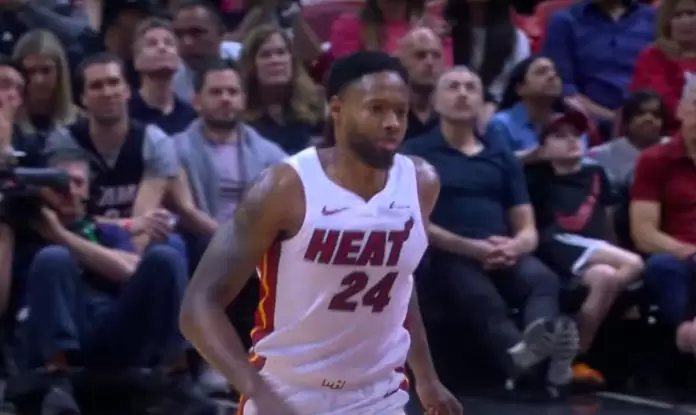
NBA insider Jake Fischer reported on The Stein Line that forward Haywood Highsmith may reemerge in trade talks after Dec. 15, when he becomes eligible to be moved again.
The 28-year-old was dealt from the Miami Heat to the Brooklyn Nets last week in a financially motivated move. Miami packaged Highsmith with an unprotected 2032 second-round pick to Brooklyn, receiving only a heavily protected 2026 second-rounder in return.
For the Heat, the trade provided critical salary relief. By offloading Highsmith’s $5.6 million expiring deal, the franchise dropped below the luxury tax line by nearly $4 million, resetting its repeater tax clock and generating a $5.6 million trade exception.
Highsmith’s value as a rotation player was evident last season. He appeared in 74 games, starting 42, while averaging 6.5 points and 3.4 rebounds in 24.6 minutes per game. His .382 shooting from beyond the arc and ability to guard multiple positions made him a reliable three-and-D option in Erik Spoelstra’s system.
However, his market value took a hit earlier this month after he suffered a torn meniscus during an offseason workout. Surgery sidelined him for an expected 8–10 weeks, raising questions about his availability for the start of the 2025–26 campaign.
Despite the injury, Brooklyn saw value in the transaction as part of its broader strategy to accumulate draft capital. The Nets used their cap space to absorb Highsmith’s contract while adding yet another future pick to their collection.
Whether Highsmith fits into Brooklyn’s rotation long-term remains unclear. The team has several forwards competing for minutes, and with his injury timeline still uncertain, his role may be secondary to the asset acquisition itself.
The Dec. 15 trade eligibility date now looms as a potential turning point. If Highsmith returns to form and proves healthy, his expiring contract combined with his skill set could once again draw interest from playoff contenders.
For the Nets, that scenario could mean flipping him for additional draft compensation before the February deadline. For other teams, it represents a chance to add a low-cost veteran defender who spaces the floor.