

The NBA trade exception is one of the league’s most important but often misunderstood salary cap tools. It allows teams to acquire players without sending out matching salaries, provided the incoming contract fits within the exception’s value.
A trade exception is generated when a team trades away a player and does not take back an equal amount of salary in return. The value of the exception equals the departing player’s salary, or sometimes slightly less, depending on the structure of the trade.
The exception can be used within one year of the trade’s completion, giving the front office flexibility. It does not allow a team to combine exceptions or add them together, but it can be used to absorb a single player’s contract or split across multiple deals.
A well-known example occurred in 2020 when the Boston Celtics created a $28.5 million trade exception after sending Gordon Hayward to the Charlotte Hornets in a sign-and-trade. At the time, it was the largest exception in league history and later helped Boston acquire Evan Fournier from Orlando.
More recently, earlier this month, the Miami Heat generated a $5.6 million trade exception by sending Haywood Highsmith to the Brooklyn Nets. That move not only saved the Heat money under the luxury tax threshold but also gave them a tool to potentially add another rotation player later in the year.
Teams use trade exceptions strategically, often waiting until midseason or close to the trade deadline when opportunities arise. Because they last for 12 months, exceptions can even extend into the following offseason, creating long-term flexibility.
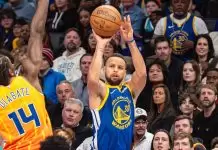
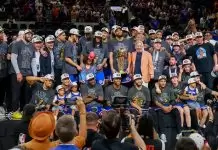
Another notable case came in 2022 when the Golden State Warriors received a $17.2 million trade exception after sending Andre Iguodala to the Memphis Grizzlies. That exception later played a role in managing their luxury tax obligations and building out their roster around Stephen Curry, Klay Thompson, and Draymond Green.
While trade exceptions cannot be traded themselves, they are valuable for cap management. They allow front offices to remain competitive even when payroll is tight, offering a way to add players without reshaping the roster entirely.