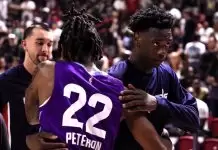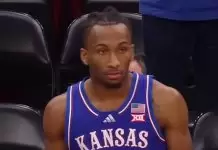


Projected No. 1 pick Darryn Peterson is facing scrutiny beyond the box score, as former No. 2 overall draft pick Jay Williams questioned the Kansas freshman’s commitment on ESPN’s Get Up.
“If I were a general manager, I would be extremely concerned about Darryn Peterson. … His talent is unquestionable. It’s elite. But I don’t feel like he really wants to be there,” Williams said.
Peterson has played 15 games for Kansas this season, averaging 20.0 points in 26.9 minutes while shooting 48.5% from the field and 43.1% from three-point range. He has also added 3.7 rebounds and 1.5 assists per game, reinforcing why scouts view him as a franchise-level talent in the 2026 NBA Draft.
The concerns center on availability rather than production. Peterson has missed 11 games, including nine due to a hamstring strain, one because of an ankle injury, and one with flu-like symptoms.
His late scratch against No. 1 Arizona on February 10 intensified the conversation after he was ruled out roughly an hour before tipoff despite participating in warmups. That absence fueled online speculation about his relationship with coach Bill Self.
A viral video showed a man texting at the scorer’s table and claiming Peterson had clashed with Self and said, “F— It, I’m out.” Kansas Athletics later clarified that the individual was a contracted ESPN statistician with no affiliation to the program and denied the claim.
Self has consistently defended his star guard’s health status. The Hall of Fame coach said he learned about the Arizona absence about an hour before the game and stated Peterson “tried, but couldn’t get there,” calling the surrounding narrative “BS.”
From an NBA perspective, durability questions often carry weight for top picks. Hamstring injuries, however, routinely sideline professional players for extended stretches, and several league executives have downplayed the long-term concern given Peterson’s age and statistical efficiency when active.
Kansas relies heavily on Peterson’s shot creation and perimeter scoring, and his 6.8 three-point attempts per game reflect a central offensive role. When he is unavailable, spacing and late-clock options shrink.
At the same time, draft evaluators prioritize long-term upside over short-term college availability. Peterson’s efficiency from deep and nearly 80% free-throw shooting suggest translatable scoring tools at the next level.