

The race to the top of the 2026 NBA Draft is already taking shape as this season of NCAA basketball unfolds. Scouts are evaluating tools and upside, but betting markets respond even more quickly to production, efficiency, and high-leverage performances. That dynamic creates early movement long before the draft order is finalized.
Several prospects have separated themselves from the pack not only by their statistics but also by how their skill sets project to the modern NBA.
From high-usage wings to advanced combo guards, these players are driving conversation across mock drafts and wagering boards. As conference play intensifies and March approaches, their positioning continues to shift in real time.
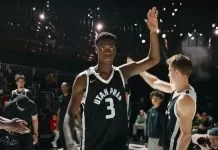
AJ Dybantsa
Team: BYU Cougars
Key Stat: 24.8 PPG on 52.1% shooting from the field
AJ Dybantsa leads the nation in scoring, asserting himself as the premier offensive force in NCAA basketball. Since Richie Saunders suffered a season-ending injury, Dybantsa has assumed even greater responsibility, maintaining elite efficiency despite defensive schemes designed solely to slow him down.
He projects as a high-usage, self-creating wing. This is the type of archetypal asset that NBA franchises covet when searching for a primary option. His ability to generate shots at all three levels against Big 12 competition strengthens his case as the frontrunner for the No. 1 overall pick in 2026.
Draft markets reflect that reality. His odds to go first overall are tightening steadily, sparking debate over whether observers should act before March or wait for tournament confirmation. Those tracking FanDuel Basketball props and early draft positioning see a clear upward trend, particularly for rebuilding teams seeking a foundational scoring wing.
Cameron Boozer
Team: Duke Blue Devils
Key Stat: 22.6 PPG, 10.0 RPG, 4.0 APG on 58.3% shooting and 40.4% from three pointers
Cameron Boozer delivers arguably the most complete statistical profile in NCAA basketball. At 6-foot-9, he combines interior scoring, perimeter accuracy, rebounding dominance, and defensive activity into one efficient package. His 1.6 steals per game further highlight his two-way awareness.
Evaluators consistently describe Boozer as one of the most well-rounded players in the country. The race between Boozer and Dybantsa for the top draft slot remains extremely tight, and strong conference and tournament performances by either could tilt the narrative in one player’s favor.
From a draft betting standpoint, Boozer’s production tends to fluctuate less dramatically than high-volume wings. That consistency may appeal to franchises prioritizing dependable impact. Historically, Duke prospects often see their stock amplified during deep tournament runs, and Boozer’s steady profile positions him well to continue that trend.
Darius Acuff Jr.
Team: Arkansas Razorbacks
Key Stat: 22.0 PPG and 6.2 APG on 49.3% shooting from the field
Darius Acuff Jr. continues John Calipari’s tradition of explosive freshman guards. He pilots an Arkansas offense ranked fourth nationally in adjusted efficiency, blending scoring aggression with advanced playmaking reads.
In today’s NCAA basketball environment, narratives show that teams prioritize guards who pressure defenses while creating for teammates. Acuff checks both boxes. His ability to score over 22 points per game while distributing more than six assists reflects the modern guard blueprint that front offices actively pursue.
Yet draft markets still position him slightly below more established names. That creates intrigue if Arkansas sustains its offensive dominance into March.
Lottery teams in need of a dynamic initiator could elevate his range quickly, especially if he performs against elite competition in conference and national tournament settings.
Christian Anderson
Team: Texas Tech Red Raiders
Key Stat: 19.1 PPG and 7.7 APG on 42.4% from three pointers
Christian Anderson already owns tournament credibility after scoring 22 points in a Sweet 16 victory as a freshman. Now, his sophomore leap places him firmly in draft conversations. He pairs near-20-point scoring with elite assist numbers and outstanding perimeter shooting.
Few players in NCAA basketball combine 42.4% three-point accuracy with nearly eight assists per game. That blend aligns with the NBA’s emphasis on spacing and multi-dimensional guards. Anderson can operate as a primary ball handler or space the floor off the ball.
With Texas Tech losing Toppin, Anderson shoulders even greater responsibility. His individual tournament performance carries significant weight. A deep March run could shift his draft odds substantially, particularly for teams valuing decision-making and shooting precision over pure athletic upside.
Labaron Philon
Team: Alabama Crimson Tide
Key Stat: 21.5 PPG with three-point improvement from 31.5% to 39.4%
Labaron Philon steps into Alabama’s lead scoring role after Mark Sears departed and responded with elevated production. His scoring climbs above 21 points per game, and his three-point percentage makes a significant year-over-year jump.
Operating in Nate Oats’ high-tempo system, Philon thrives in pace-and-space conditions that closely resemble NBA frameworks. He balances transition attacks with improved half-court efficiency, reinforcing his long-term projection in modern offensive schemes.
Among this group, Philon may offer the widest draft-position swing. A strong SEC and NCAA tournament stretch could move him from fringe lottery discussions into clear top-15 consideration. Teams seeking improved perimeter shooting alongside volume scoring will continue monitoring his upward trajectory.
Draft Boards and Betting Markets Begin to Converge
As March approaches, the synergy between NCAA basketball performance and draft betting markets intensifies. Individual stat lines, strength of schedule, and postseason visibility all influence perception, and perception shapes odds.
Dybantsa and Boozer headline the debate at the top, while Acuff, Anderson, and Philon each present distinct pathways to climb. Tournament moments often accelerate momentum, especially for prospects already trending upward.
With several months remaining before the 2026 NBA Draft, the landscape remains fluid. Still, the early signals are clear: these five players command attention across scouting departments and betting boards alike. Every performance from here forward carries amplified significance.