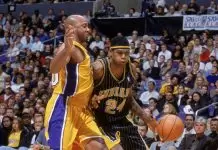

Jonathan Bender’s NBA story began with high expectations. Drafted fifth overall in 1999 straight from high school, he was seen as the next big thing—a 6-foot-11 swingman with guard-like skills.
The Indiana Pacers traded for him before his rookie season even started. Larry Bird, then the team’s President of Basketball Operations, believed Bender would change the league if he stayed healthy.
Unfortunately, injuries defined much of Bender’s career. Between 2001 and 2006, knee problems limited him to just 76 games. Multiple microfracture surgeries and rehab stints disrupted his progress.
“I always knew I was gonna make it,” Bender said in a recent interview with NBA insider Brandon “Scoop B” Robinson. “But what you think it’s gonna look like when you’re 17… and what it actually becomes? Man, those are two different things.”
After retiring in 2006 at age 25, Bender did not fade away. Instead, he transformed his pain into purpose by developing the JB Intensive Trainer in 2013, a device designed to help athletes strengthen their knees and prevent injuries.
The product earned respect from NBA veterans like Penny Hardaway and Amar’e Stoudemire. “That felt good. Like, I found another way to hoop — just not on the court,” Bender reflected.
In 2009, he made a brief comeback with the New York Knicks, playing 25 games. That period was less about stats and more about personal closure.
Bender now often hears that he was ahead of his time. Modern players like Kevin Durant embody the versatile, positionless style Bender once tried to pioneer.
“I tip my hat to him,” Bender said. “He stayed healthy. That’s the difference.”
Looking back, Bender views his legacy not through points or accolades, but through resilience and reinvention.
“I always wanted to inspire,” he said. “Sometimes, it ain’t about the highlights. It’s about showing people how to move when life says ‘nah.’ I think I did that.”
Jonathan Bender’s journey highlights the challenges of early NBA stardom and the power of finding new paths beyond the court.