
The four best tools to master ball control at home are dribbling goggles, weighted basketballs, agility cones, and ankle resistance bands.
These collectively build essential hand strength, footwork, and spatial awareness. Integrating these training aids into a consistent home basketball workout transforms any driveway or garage into a highly effective development space.
Players can systematically improve dribbling skills and court vision without requiring a full court, a coach, or expensive facility access.
There is a specific moment every serious player knows well when the gym is closed, but the desire to improve remains strong.
You have a ball, a little space, and a genuine desire to get better. Without a coach directing repetitions or a court to run plays on, it is incredibly easy to wonder if the solo work actually counts.
A structured routine is what truly bridges the gap between casual bouncing and real improvement.
Some of the most fundamentally sound ball handlers in the game built their foundation exactly this way. They did not rely on perfectly lit facilities with a staff of trainers. They relied on focused mechanics and the right basketball training equipment.
MORE FOR YOU
This unseen work prepares them for game day, whether they eventually wear standard practice pinnies or Sports Gear Swag’s custom team jerseys.
1. Dribbling Goggles Train Your Hands
The Function of Dribbling Goggles
Dribbling goggles are training aids featuring opaque lower lenses that block your downward line of sight.
While they look a little unusual, they work remarkably well for developing point guards and perimeter players.
The principle behind them is straightforward, as most developing players unconsciously watch the ball while they dribble.
While it feels safer, it creates an immediate skill ceiling that limits your overall court vision.
The exact moment you look at the ball, you lose sight of the court. You stop seeing defenders rotating, open teammates cutting toward the basket, or crucial gaps opening in the defense.
Goggles force your hands to execute the spatial tracking that your eyes used to manage. You build genuine muscle memory because the visual crutch is entirely removed.
Quick Drill For Two Ball Stationary Dribble
This simple drill requires you to maintain control without visual confirmation. Find a spot with enough flat clearance to bounce two balls simultaneously.
- Begin with alternating pound dribbles at hip height.
- Hold this rhythm for 30 seconds to focus on fingertip contact.
- Progress to simultaneous dribbles so both balls hit the floor together.
- Rest for 15 seconds and repeat for 3 total rounds.
Maintain an athletic stance with knees bent, back flat, and weight positioned forward on the balls of your feet.
The moment you stand upright, the drill loses its value. Keep your eyes up, even though the goggles obscure your downward view. That blind habit is exactly what translates to live games.
2. Weighted Basketball Build Hand Strength
The Function of Heavy Basketballs
A weighted basketball is significantly heavier than a regulation ball, typically ranging from two to three pounds above standard weight.
It directly targets the hand, wrist, and forearm strength that serves as the foundation for every dribble move.
The additional resistance forces your muscles to fire under a heavier load. This remains one of the most efficient forms of basketball training equipment for home use because it requires virtually zero space.
When you switch back to a standard basketball, your grip feels immediate, and your crossovers snap tighter.
Your pound dribbles feel visibly more explosive. The ball begins to respond to your hands rather than the other way around.
A player can run a comprehensive weighted ball circuit in a single parking spot.
Quick Drill For Weighted Crossover Circuits
You will need the weighted basketball and two small floor markers spaced three feet apart. Tape, cones, or any household objects work perfectly to represent a movement boundary.
- Begin with 30 seconds of strict pound dribbles using the weighted ball.
- Transition immediately into alternating crossovers across the floor markers.
- Rest for 15 seconds to let the forearms recover.
- Repeat the circuit for 3 full rounds.
Do not sacrifice your physical form simply to achieve speed during this exercise.
Crisp and intentional repetitions build the neural pathways that translate to the court. Sloppy and high-volume reps only reinforce bad habits.
Key Insight: Switching from a weighted ball to a regulation one creates an immediate “lightness” effect. This neural contrast sharpens your timing and makes your standard crossover feel significantly more explosive.
3. Agility Cones Improve Footwork Dynamics
The Function of Training Cones
Agility cones are simple and lightweight markers that create structured movement patterns within a very small footprint.
A simple set of four cones can instantly transform a driveway or backyard into a legitimate skill development station.
Elite ball handling is not just a hand skill; it is fundamentally a coordination skill. Your handles only function in live games if your feet are positioned correctly underneath them.
You need a low stance, balanced weight, and the ability to change direction violently without losing control of the ball.
Cones force footwork and ball control to develop in tandem.
Research actually shows that targeted neuromuscular programs improved postural control and lower limb stability in developing athletes.
Adding these structured cone drills helps build that essential physical foundation.
Quick Drill For Zig Zag Cone Dribbling
Place four cones in a zig-zag pattern, spacing them roughly four to six feet apart. This arrangement fits comfortably in most standard driveways or basements.
- Dribble aggressively through the course with your dominant hand.
- At each cone, execute a sharp directional change like a tight crossover.
- Complete the entire course using your non-dominant hand.
- On the final pass, alternate your hands between each cone gate.
Treat each cone as a live defender to maximize the drill value. You are not just running a geometric pattern; you are reading a defense and making a decision.
Standing upright between directional change signals to defensive players that you have momentarily lost your handle. Stay consistently low between the cones to protect the basketball.
4. Resistance Bands Create Explosive Separation
The Function of Ankle Bands
Resistance bands worn around the ankles during ball handling work represent one of the most underutilized tools in individual skill development.
The band creates constant lateral tension that forces the hips, glutes, and stabilizing muscles to engage deeply.
A crossover or a baseline drive only succeeds if the offensive player’s first step creates authentic separation.
If the lower body is weak or unstable, the offensive move stalls before it ever materializes.
Building strong legs and a low, highly controlled stance is the exact mechanism that makes ball-handling drills at home translate to live game environments.
Incorporating this dynamic resistance acts as excellent injury prevention as well.
Medical studies confirm that integrating neuromuscular exercises into regular routines reduces the incidence of serious lower limb injuries in basketball players.
Quick Drill For Side Shuffles
Secure a resistance band loop around both ankles. Stand in a wide athletic stance in a clear space, ensuring you have about eight to ten feet of lateral room.
- Perform lateral side shuffles to the left and right.
- Simultaneously dribble with your outside hand throughout the movement.
- Keep the ball in your hand, facing your direction of travel.
- Hold this pattern for 45 seconds, rest, and repeat for 3 rounds.
Stay low and ensure your knees consistently track over your toes. Do not let your knees cave inward under the band’s tension.
Above all, do not let the demanding footwork interrupt your dribble rhythm. Your handle must remain active and consistent regardless of how hard your feet are working.
Pro Tip: Use resistance bands to focus on the first step of your drive. True separation isn’t just about hand speed; it is about the explosive power generated by your hips and glutes.
Quick Reference For Training Tool Comparison
Selecting the right basketball training equipment depends entirely on your current skill gaps. This brief overview helps you match each tool to specific developmental needs.
| Training Tool | Target Skill | Space Needed | Difficulty Level |
| Dribbling Goggles | Court awareness | Minimal | Beginner |
| Weighted Ball | Hand strength | Minimal | Intermediate |
| Agility Cones | Footwork direction | Small open area | Advanced |
| Resistance Bands | Lower body stability | Minimal | Advanced |
Important: Having the right gear is only half the battle. Results depend entirely on the intensity of your repetitions. Avoid going through the motions and treat every home drill like a game-winning possession.
Putting It All Together For Solo Workouts
The athletes who consistently invest in ball-handling drills at home build much more than just a physical skill set. They build internal confidence.
That specific brand of confidence comes from knowing, long before the opening tip, that the necessary unseen work has already been completed.
These four tools yield even better results when layered progressively.
Wearing goggles while running the cone drill or adding resistance bands to the crossover circuit teaches the body to adapt to compounding pressure.
This layered methodology mirrors how actual game fatigue develops and prepares the central nervous system to handle it.
Individual skill development naturally feeds into organized team success on the court.
Players who arrive at team practice having already done the private work fundamentally alter the group’s dynamic.
Their handles hold up under trapping defenses, their conditioning keeps them low in the fourth quarter, and their preparation sets a standard.
High-quality preparation communicates to opponents that the squad prepared meticulously, and that preparation is about to show on the scoreboard.
The Bottom Line
Mastering ball control requires targeted tools, specific skills, and consistent repetition in whatever training footprint you have available.
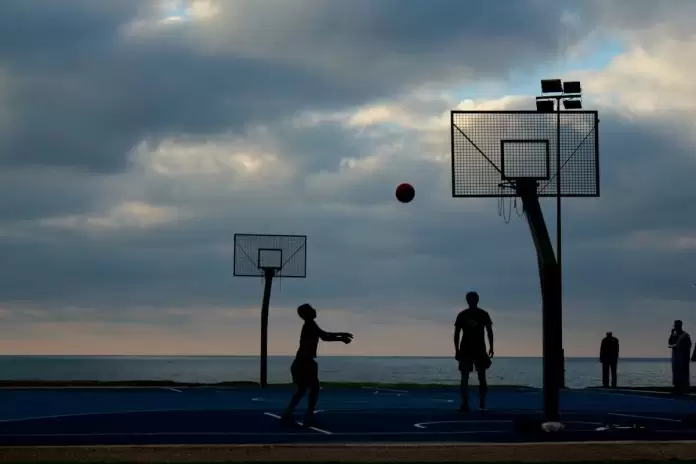
The empty driveway matters, the basement setup counts, and the backyard sessions are where true progress happens.
Elite ball handlers are not forged exclusively under bright gymnasium lights while coaching staffs watch every single repetition.
They are built in the quiet, in between moments when personal motivation intersects with a highly focused plan.
Select just one tool from this breakdown today to improve dribbling skills and run the associated drill.
Be completely honest with yourself regarding your stance depth, your footwork precision, and your dribble consistency.
Return tomorrow to run the routine again. The handles you carefully construct in isolation will undoubtedly show up when your team needs you the most.
Your individual dedication to a home basketball workout is the ultimate foundation for unstoppable on-court performance.
Author Profile: Sports Gear Swag is the leading online retailer of custom sports apparel and gear for teams, schools, and organizations of all sizes. Specializing in team jerseys, uniforms, and athletic apparel with a wide range of customization options.