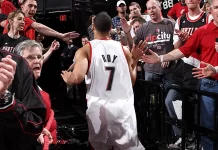

Brandon Roy’s name does not need a highlight package to start a debate. Put it on a Hall of Fame ballot, and the basketball world does the rest.
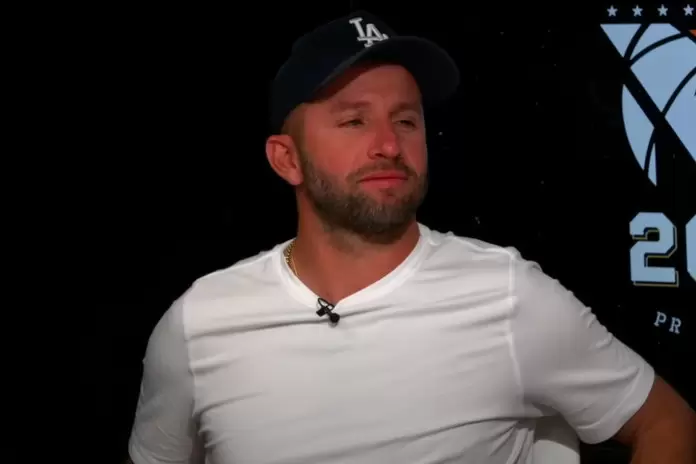
Denver Nuggets assistant coach J.J. Barea is one of the latest voices pushing that conversation forward, framing Roy as a rare talent whose prime still lingers with the people who had to guard him and game-plan him.
“He’s one of the, you know, especially in Portland, one of the best to play over there,” Barea said. “Has some crazy battles in the playoffs that he took over games. I was his teammate in Minnesota. So just if it wasn’t for injuries, he’s same, but had great career, one of the best, most talented players I seen.”
That’s the core of Roy’s case. The peak was obvious. The time was stolen.
Barea’s Lens, Up Close
Barea’s quote carries two kinds of credibility. First, it is rooted in watching Roy as an opponent, the version that flipped playoff games when a defense thought it had done enough. Second, it comes from their brief overlap as teammates in Minnesota, when Roy’s reputation was not mythology. It was daily work.
Barea didn’t dress it up with numbers. His emphasis was “took over games,” the phrase players use when they are talking about someone who could bend a series.
Portland remembers. Opponents remember, too.
MORE FOR YOU
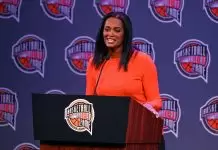
That memory is why Roy showing up on the 2026 Basketball Hall of Fame ballot landed with quiet force. There was no big rollout, just his name, and then the familiar question: What does the Hall owe a player whose best was Hall-level, even if his career wasn’t long?
The Peak That Still Hits
The résumé that backs the feeling is clean. Roy won Rookie of the Year in 2006-07. He earned three All-Star selections from 2008 to 2010. In 2008-09, he finished in the top 10 of MVP voting, a shorthand for being in the league’s inner circle at his position.
The debate is not whether Roy was great. It is whether the Hall values a prime that ended early the same way it values a prime that stretched a decade.
RG’s reporting also notes the Hall’s wider lens. Roy’s college run at Washington included Pac-10 Player of the Year honors and All-American recognition. Since leaving the NBA, he has stayed connected through coaching, including multiple Washington state titles at the high school level and a national High School Coach of the Year award.
Witnesses Who Don’t Flinch
Barea isn’t the only voice framing Roy as a tier player when he was right. Jamal Crawford, who has long been one of Roy’s loudest advocates, pointed to the trait that made Roy so hard to rattle.
“I mean, nobody could speed up his game,” Crawford said, praising Roy’s control, IQ, and late-game calm. He called Roy “flawless,” and he didn’t say it like a metaphor. He said it like a scout.
Kevin Durant took a similar angle, arguing the nomination shouldn’t be treated as sympathy for injuries. Durant said Roy was one of the toughest players to stop, and placed him among the guards’ defenses feared late in games, the closers who could get a clean look when everyone in the arena knew the shot was coming.
Those are not casual compliments. They are opponent memories, the type that stick.
What The Hall Is Really Deciding
The Hall of Fame is not a spreadsheet. It is a story about what basketball greatness looks like across eras. Roy’s candidacy keeps resurfacing because it forces voters to choose between two philosophies.
One philosophy rewards longevity, the accumulation of seasons and totals. The other rewards dominance, the years when a player was unmistakably among the best alive at his craft.
Roy’s supporters live in the second bucket. They are not asking voters to project what might have happened. They are asking them to remember what did happen, and to weigh how rare that level was.
Barea’s quote fits that framing. “Most talented,” he said, and then he went straight to the hinge of it: “if it wasn’t for injuries.” It is not a fantasy about a different career. It is a reminder that greatness was already here, and then it got interrupted.
This is where Hall debates get uncomfortable, because voters are being asked to honor what happened, not what could have happened. Roy’s advocates argue what happened is enough.
The ballot makes it official. The league’s memory supplies the rest.