
Basketball is a high-flying and thrilling game on earth today with millions of players and fans from every continent. From basic back-street court to the massive arenas of the NBA, the game is a celebration of teamwork, quickness, and smarts. But where did basketball begin? The story of how basketball began is not merely intriguing but an exercise in creativity and resourcefulness. Interestingly enough, according to history, the early days of basketball also saw the same kind of spirit of innovation with which digital games developed from basic concepts to international entertainment centers such as double diamond slots and other internet casino games, entertaining millions around the world.
The Birth of Basketball: A Game Born Out of Necessity
The history of basketball goes back to the winter of 1891 in Springfield, Massachusetts, USA. Dr. James Naismith, the physical education teacher of the International YMCA Training School, was presented with a dilemma. His students were not allowed to play outdoor games such as soccer or baseball during winter. He wanted a game, which could be played indoors and would keep his students active and entertained and safe too.
Naismith’s goal was to develop a game that demanded skill rather than sheer strength and the team effort over individual mastery. He envisioned a game of running, jumping, and throwing but without the smashing body contact of football or rugby. Thus was born basketball: a straightforward solution to a winter season boredom issue.
The First Game: A Peach Basket and a Soccer Ball
The original basketball game was nothing like we know it today. No high-tech sneakers, no three-point line, and no hardwood floor. Naismith just spiked two peach baskets to the balcony of the gym roughly 10 feet above the floor and utilized a soccer ball as the equipment. There were nine players per team, and the idea was simple get the ball into the other team’s basket.
Interestingly, following every score, one would have to climb up a ladder in order to get the ball out of the peach basket since the peach basket bottom was closed! Not until later were bottoms taken off so the ball would fall through easily, one of the first design improvements worked out in the game.
In spite of its simplicity, the first game was an overnight hit. Students enjoyed the test and thrill. The integration of running, passing, and shooting resulted in a rhythm that was new to any indoor game at that time.
The 13 Original Rules of Basketball
Dr. Naismith not only invented the game he also codified its original 13 rules, upon which basketball is constructed today. Rules were simple but revolutionary. They banned running with the ball, meaning players had to pass the ball in order to advance it. Physical contact was permitted only to avoid injuries, and a point was simply a matter of getting the ball into the other basket.
Some of Naismith’s original rules are as follows:
- The ball can be thrown in either direction by one or both hands.
- The ball can be batted in either direction with one or both hands (but never with the fist).
- No running with the ball a player must throw it from where he caught it.
- No shouldering, holding, pushing, tripping, or striking.
- The game consists of two fifteen-minute periods, separated by a five-minute rest.
Even though basketball has come so far since then, the spirit of these initial rules movement, ability, and teamwork is what defines the game even now.
The Spread of Basketball: From YMCA to the World
Once invented, basketball became popular beyond Springfield very quickly. The YMCA also helped popularize the game, as its members toured and propagated basketball to other cities and abroad. Within a matter of just a few years, basketball spread to Canada, Japan, China, and most of the European countries.
By the year 1893, the women’s initial game of basketball was held at the Smith College, two years after the game was invented. The game continued to develop with rule changes, team sizes, and gear to make it competitive and fun.

The game became officially recognized when the first professional leagues began to emerge in the early 1900s. Later, in 1936, basketball officially made its Olympic debut at the Berlin Olympics. Dr. Naismith, the inventor of the game, was able to witness his game on the international stage before his death in 1939.
The Evolution of Basketball Equipment
As the game of basketball initially started, players didn’t wear specialized equipment. They wore regular clothes, and the court was usually made of coarse wood. The sport’s equipment changed every aspect over time from the ball to the shoes to the basket.
The ball itself was changed from the soccer ball to a specially designed spherical ball with better grip and bounce. Rubber bladder technology that enabled dribbling came later and was not part of the game at first. The peach baskets were provided with nets, and metal rims were used to enable smoother, faster scoring.
The game itself also saw dramatic reform. The advent of the three-point line in the latter part of the 1970s altered the strategy of the game, rewarding the innovative and the marksmen from distance. Even the floor was improved, giving the players better traction and protection.
The Birth of Professional Basketball
The first half of the 20th century witnessed basketball moving from amateur to professional sport. The cities started purchasing teams, and people started paying to see the game. The National Basketball League (NBL) was the initial professional league which was established in 1898 but survived only for a few years.
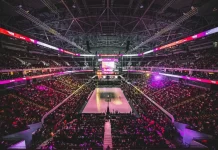
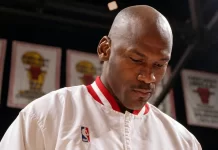
The Basketball Association of America (BAA) was formed in 1946, which in 1949 merged with the National Basketball League (NBL) to form the National Basketball Association (NBA) the world largest and most renowned basketball league. The NBA brought basketball onto the world stage by providing us with legends like Michael Jordan, Magic Johnson, Larry Bird, Kobe Bryant, and LeBron James.
The combination of athleticism, artistry, and strategy the sport encompasses fascinated global publics, transforming basketball into a multibillion-dollar global business and an international phenomenon.
Basketball’s Influence on World Culture
Basketball is more than a sport; it’s a cultural force. It has permeated fashion and music, film and video games, leaving its mark on nearly every aspect of modern life. Players are global icons, and basketball street fashion has become infused with fashion worldwide.
There is also international popularity of the game in the form of world leagues and tournaments. FIBA Basketball World Cup and Olympic basketball tournaments include the best of the players from around the world, showing the global popularity of the game.
Spain, Argentina, France, and the Philippines have provided the world with top-class players who compete alongside American legends in the NBA. Basketball is today a meeting ground that unites humanity across cultures, languages, and ages.
Putting Basketball’s Evolution in Perspective with Modern Gaming
Intriguingly, the history of basketball mirrors virtual entertainment. As Naismith’s indoor play that began in humble times swept to become a global craze, so too has the gaming business begun from humble times in terms of arcade machines to total virtual experiences. double diamond slots and other websites for online casinos have followed the same course from humble concepts to sophisticated systems offering users excitement, competition, and fellowship.
Both video gaming today and basketball both succeed through excitement, innovation, and accessibility. Either an exciting slam dunk or a victory in a video game, both bring excitement and entertainment through mutual excitement and skill.
From a Springfield Gym to an International Arena
The history of basketball teaches us of man’s ingenuity and creativity. From a makeshift remedy to the indoor problem of lethargy, it has grown to become one of the most hallowed sporting spectacles in the world. From peach baskets to Dr. Naismith to computerized stadiums today, the history of basketball teaches us of our ageless desire for entertainment, companionship, and competition.
It’s larger than a game, though. Basketball is the world language of hope, collaboration, and determination. Its modest beginning reminds us all too vividly that the best concepts can appear modestly in a gymnasium experiment or web phenomenon. And so it strikes again, basketball keeps expanding, compelling future generations to dream, play, and reach beyond boundaries.