

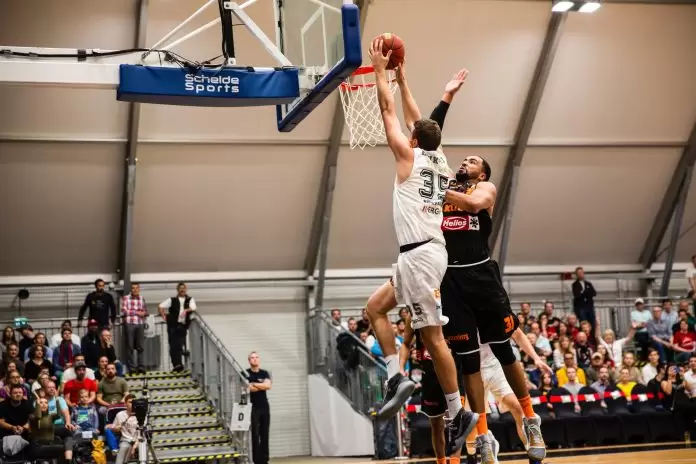
Spacing has stretched to the corners, bigs handle like guards, and playmakers launch threes from the logo. Offenses hunt weak links through screens and re-screens until something breaks. Switching meets that pressure head-on: trade assignments cleanly, keep the ball in front, and turn a complex action into a simple one-on-one.
Watch from the game cam angle and it jumps out. A handler calls for a screen; two defenders exchange responsibilities without panic; the roller never finds daylight; the kick-out arrives half a beat late and a hand is already in the shooter’s line. No scramble, no long rotation, no cheap corner three. Just as a packed arena crackles with energy, the nude cam delivers that same rush straight to your screen.
The idea isn’t new. What’s different now is the frequency and the precision. Teams aren’t switching just to survive a mismatch; they’re switching to erase the advantage at its source. Done well, the offense runs through its menu and never quite tastes a clean look.
The logic of the switch
Pick-and-roll was built to force two defenders to guard one ball handler. By switching, you decline the trap the offense set. Keep bodies between ball and basket, then challenge isolation. With wingspan and foot speed across the lineup, the “advantage” evaporates. Offenses that rely on creating separation through screening find that separation instantly flattened.
Analytics pushed this shift. Shots at the rim and threes are the diet of modern efficiency. Switching reduces the lob, crowds the lane, and turns many possessions into contested pull-ups. If you can win the one-on-one enough of the time, you win the math and the game.
Personnel makes the scheme
No system survives bad fit. Switch teams are built on rangy forwards who move like guards, plus a center who can slide on the perimeter and still protect the cup. Think of the prototype: a 6-8 defender with a 7-2 wingspan who can switch onto point guards for two bounces, then bang with posts for one dribble and a stab at the ball. The center’s job is nastier: show discipline on the ball, peel back to the paint, end possessions with a rebound.
Depth matters, too. Switch groups often play nine or ten because the work is tiring: every possession is a series of short sprints, bumps, and contests. The bench has to defend at the same level or the rope snaps.
Communication is the secret sauce
There’s no perfect switch without perfect talk. The call has to arrive before contact: “Switch left, top lock, scram early.” The best units don’t just trade assignments; they solve chain reactions. Three staples:
- Pre-switching: trade checks a beat early to keep your best big on their best big before the screen even arrives.
- Scram switching: when a guard gets buried on a post, a weak-side defender cuts the post feeder’s vision and swaps in the big from the baseline.
- Peel switching (veer back): on a drive after a switch, the big veers to pick up the roller while a perimeter teammate peels onto the ball.
These look like magic on film. They’re just reps and rules.
Variations that keep it fresh
Switch-everything is a blunt tool. Smart teams layer versions:
- Late-clock switching: fight through early, switch only under seven seconds to avoid long mismatches.
- Selective switching: switch guard-guard and wing-wing; fight through against bruising screens from a true five.
- Top-lock and trail: deny shooters the catch by locking on their high shoulder; if beaten backdoor, the next defender switches and the low man tags the rim.
- Switch and deny: after the switch, jump to the line of the pass and blow up the counter swing.
The point isn’t dogma; it’s denying the offense the read it wants.
How offenses counter—and how switches survive
Once the league embraced switching, offenses adjusted. Four common counters and the answers:
- Slips and ghosts: the screener fakes contact and darts to space. Solution: call it early, show two to the ball for a beat, then “bump” the slip with the nearest help while staying home on shooters.
- Spain pick-and-roll: a back screen on the big frees the roller. Solution: switch the back screen on the fly (the “Spain switch”), or pre-switch so the back screener never hits cleanly.
- Duck-ins and deep seals: hunt smalls in the post after the switch. Solution: scram fast from the weak side, force lob angles high, and dig on the bounce—not on the gather.
- Empty corner actions: remove help and drive the switch one-on-one. Solution: shrink the floor early—“nail” help one step inside the free-throw line, then fly out on the kick.
When the ball finds a mismatch anyway, the directive is simple: show chest, absorb one dribble, call the dig, and contest without fouling. Don’t compound the mismatch by sending late help that yields a corner three.
Rebounding without a matchup edge
Switching spreads defenders all over the floor. That kills traditional box-outs. The fix is a habit: first hit, then hunt. Guard checks the nearest big and calls “hit,” wing drops from the perimeter to take the glass, and the center cleans up long rebounds created by late-clock jumpers. Some teams send two to the glass and sprint three back to eliminate runouts; others trust five-man gang rebounding. Either way, you script it and you live with it.
Why coaches love it
- Simplicity under stress: one call covers most actions. Young lineups can survive defensively with fewer moving parts.
- Fewer desperate rotations: closeouts get shorter, and corner threes drop.
- Versatility in series: in playoffs, switching becomes a choke point; opponents must win with isolation and post play across seven games.
- Fits modern rosters: drafts and signings prioritize length and mobility. Switch rules allow those athletes to play fast without thinking.
Teaching progression that actually works
Start with 2-on-2. Emphasize body position, talk, and the handoff of responsibility. Add a coach with the ball to throw slips so defenders learn to read the screener’s hips. Move to 3-on-3 chase actions, then 4-on-4 where the weak side “zones up” between two shooters. Only when the habits hold do you go 5-on-5 with live rebounding and transition.
Layer in constraints: defense must get three consecutive stops to rotate out; offense earns a bonus point for a slip score to stress communication; defenders who fail to tag on a peel switch run a quick baseline and jump back in. The goal isn’t punishment; it’s concentration.
When not to switch
There are nights when the math flips. If the opponent has a dominant post who punishes smalls without coughing up turnovers, or if your group can’t secure the glass, mixing coverages helps. Drop against non-shooting guards to protect the rim and control rebound shape. Show and recover against elite pull-up shooters to steal rhythm. Zone a few possessions to reset the chessboard. The worst plan is stubbornness.
The real reason it dominates
Modern offense is a machine built to create chain reactions. Switching cuts the power. You won’t erase every advantage, but you force the game into slower, tougher possessions where skill must beat structure. With the right bodies and the right voice behind them, switching turns the clock into a defender and the half court into a maze.
Keep the rules tight, the talk loud, and the habits boring. Do that, and the scheme stops being a tactic and starts being an identity—the kind that travels, holds up in May, and makes opponents spend their timeouts chasing a weakness that never quite appears.