
The Oklahoma City Thunder closed out the Los Angeles Lakers 115-110 in Game 4 on Monday night at Crypto.com Arena, completing a second-round sweep that demanded every adjustment Mark Daigneault’s group had to offer. After the game, the Thunder head coach spent most of his press conference reflecting less on the result and more on the tactical stress points that shaped the series.
Daigneault opened with a direct acknowledgment of the Lakers’ resilience and coaching staff.
“I want to acknowledge the Lakers and congratulate them on a great season and obviously they played excellent tonight,” Daigneault said. “But it’s been an impressive run they’ve had… they’ve been unbelievably resourceful.”
He also pointed to the competitive respect between the two staffs.
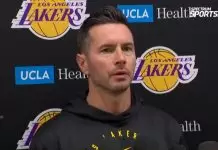
“I have high respect for JJ Redick and their staff,” he said. “And every series seems to teach your team lessons.”
The Thunder coach emphasized that the sweep was not built on dominance alone, but on adaptation against shifting defensive schemes designed to disrupt MVP Shai Gilgeous-Alexander. Los Angeles frequently mixed coverages and pressure points, forcing Oklahoma City into unfamiliar reads.
“They threw a lot of pitches at us,” Daigneault said, “and I think we’re a better team at the end of the series than we were at the beginning, and that’s a credit to them.”
MORE FOR YOU
One of the biggest tactical themes was the Lakers’ heavy use of traps and double teams on Gilgeous-Alexander. Daigneault described it as one of the most aggressive postseason coverage packages Oklahoma City has faced in recent years.
“That’s about as aggressively as we’ve been doubleteamed out on the floor in a while,” he said. “We had to sharpen our attacks.”
The Thunder did more than just survive those coverages. They repeatedly punished them late in Game 4, including key actions that produced a Chet Holmgren dunk and a go-ahead basket in the closing minutes. Daigneault pointed to those sequences as evidence of growth.
“I thought we showed great execution of that,” he said. “We’re a lot better in that area than we were coming into the series.”
Even in a game he described as inconsistent, Daigneault stressed late-game response over perfection. Oklahoma City trailed at different points in the fourth quarter before closing strong behind Shai Gilgeous-Alexander and Ajay Mitchell.
“I thought tonight was probably our worst execution game of the playoffs,” he said. “But when you’re tied with five to go, you just got to be present.”
He added that the final stretch was the clearest indicator of the team’s composure.
“I thought the last six minutes of the game was our best six minutes,” Daigneault said. “We put everything else behind us and went and got the game.”
Daigneault also discussed Gilgeous-Alexander’s broader impact beyond scoring, particularly how his gravity reshaped the series offensively for Oklahoma City.
“If you look down and see 18 points or 22 points, it’s easy to rush to a conclusion,” he said. “But the domino effect of the double teams are huge.”
He highlighted how those defensive reactions created offensive rebounds, cleaner looks for teammates, and overall spacing advantages that don’t always show up in box scores.
As the Thunder move on after completing a rare 8-0 postseason run through two rounds, Daigneault framed the sweep as a byproduct of execution, depth, and in-game correction under pressure.
“Winning eight playoff games is really hard,” he said. “But we went and earned it.”
The Thunder now advance to the Western Conference Finals, carrying both a perfect playoff record and a series worth of adjustments forged against a Lakers team that forced them into constant problem-solving.