
The NBA’s offensive explosion has forced defenses into an unprecedented tactical revolution. You’re watching teams score at rates that would’ve seemed impossible just a decade ago, and if you’ve followed the league closely, you’ll notice something fascinating happening on the other end of the court. Even platforms like Bally Bet sportsbook have started incorporating these defensive innovations into their analysis, recognizing that the old ways of evaluating team performance simply don’t apply anymore.
What we’re witnessing isn’t just coaches drawing up new plays during timeouts. This represents a fundamental shift in how teams think about defense, driven by necessity rather than preference. The numbers tell part of the story – teams are now running 68.8 ball screens per 100 possessions compared to 71.8 just two years ago. That might seem like a small change, but it reveals something profound about how offenses have diversified beyond traditional pick-and-roll dependency.
When Muscles Meet Mathematics
The marriage between traditional basketball wisdom and modern analytics has created defensive schemes that would confuse coaches from even the recent past. We’re not talking about simple adjustments here – teams are making real-time decisions based on data that didn’t exist when many current coaches were players themselves.
Consider how the Boston Celtics and Golden State Warriors have built their defensive identities around switching everything. It sounds straightforward until you realize the split-second decision-making required. Every screen, every cut, every offensive movement triggers a calculated response that’s been practiced thousands of times. The margin for error has become incredibly thin because even minimum-salary players can drain threes after the slightest defensive breakdown.
What’s particularly interesting is how this analytical approach has influenced player evaluation. Teams aren’t just looking for athletes who can defend their position anymore – they need defenders who can process information quickly and communicate complex schemes while covering more ground than ever before. The physical demands haven’t decreased, but the mental requirements have expanded dramatically.
This shift has created an entirely new type of defensive player, one that combines traditional instincts with modern versatility.
The Shape-Shifters
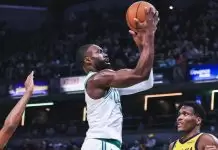
Today’s elite defenders represent something we haven’t seen before in basketball history. Players like Bam Adebayo, Jrue Holiday, and OG Anunoby can seamlessly transition from guarding speedy point guards on the perimeter to power forwards in the post – often within the same possession. It’s not just about athleticism, though that’s certainly part of it.
The Oklahoma City Thunder provide a perfect example of this evolution. Despite their relatively modest size, they’ve managed to place five players among the top 16 defenders by estimated plus-minus. Their success comes from what they call “horizontal rim protection” – using quickness to help in the paint and recover to the perimeter rather than relying on traditional shot-blocking. It’s a concept that would’ve been dismissed as impossible not too long ago.
But here’s what makes this particularly compelling: these defenders aren’t just adapting to one type of offense. In a single game, they might face five or six different pick-and-roll coverages, each requiring different positioning and communication. The Thunder’s approach works because they’ve built their entire defensive philosophy around speed and coordination rather than individual dominance.
This personnel evolution has enabled the tactical innovations we’re seeing across the league. You can’t run complex schemes without players who understand their roles within larger systems.
The New Playbook
Modern defensive schemes have reached a level of sophistication that requires perfect communication and flawless recognition from every player on the court. Teams like the Miami Heat have reintroduced zone defenses, but not in the traditional sense – they’re using hybrid schemes that combine zone and man-to-man principles to create confusion and disrupt offensive flow.
The technical aspects reveal just how much has changed. Traditional choppy-stepped closeouts have given way to more dynamic approaches, with defenders taught to fly to the side of dangerous shooters. “Scram switching” has become standard practice – rapid rotations designed to eliminate post mismatches before offensive players can exploit them. These movements happen in milliseconds and require exceptional trust between teammates.
What’s fascinating is how these innovations have created new challenges for offensive coordinators. The most successful defenses now employ what coaches call “nail help” concepts and sophisticated rotation systems that would’ve been impossible to execute without years of practice. Here’s what modern teams are running:
- Switch-everything defenses to eliminate mismatches
- Drop coverage to protect the paint while inviting midrange attempts
- Hybrid zone schemes to hide weaker defenders
- Dynamic rotation systems that adapt mid-possession
- Communication-heavy schemes requiring constant adjustment
The complexity extends beyond individual possessions. Teams are making game-to-game adjustments based on opponent tendencies, creating defensive game plans that account for dozens of different scenarios. It’s chess played at lightning speed, with each move influencing the next.
The Continuous Evolution
In some ways, the most interesting part of this defensible evolution is that it will continue to evolve, it’s an arms race, and not a destination. Offenses will continue to grow and evolve and, in turn, defenses will have to reload and roll out more advances. It is a tactical wheels that is still turning, with no signs of slowing down.
Artificial Intelligence and predictive algorithms may soon give coaches the opportunity to consider much sharper changes to its defense during the game. We are already seeing the impact of analytical prescriptives on in-game decisions, but think how quickly entire defensive schemes could be jabbed into play with real-time predictive changes. That is an entirely new paradigm of defensive thinking.
The human element still exists. Despite all possible elements of data and tech, a basketball defender still has instinct, needs communication, and has to have trust in each other. The best teams have been able to integrate all discussions around analytics implementation, while still instilling their solid stance on defense as a system that can be maximized for talent and execution.
This constant evolution around basketball shows something bigger around the continued draw of the game itself. The game is for playing. It is continually growing and changing, but just as importantly, it has evolved. Each tactical space and each broad option can be both familiar and unpredictable. It is this never-ending evolution, and the evolution of defensive schemes, that continues to change the sport of basketball.