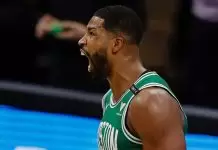


Tristan Thompson credits Rich Paul’s negotiating strategy with turning a four-year, $52 million offer from the Cleveland Cavaliers into a five-year deal worth $82 million.
When Cleveland initially presented its proposal, Thompson sought Paul’s advice rather than immediately accepting the guaranteed money. His agent challenged him to consider whether his value could increase by waiting.
“I’m on the phone with Rich and he says, ‘4-years, $52 million. What do you want to do?’ And I said, ‘What do you think?’ He said, ‘Do you think you’re going to get better this season?’ I said, ‘Yeah.’ He said, ‘Then why would we take the deal?’ I said, ‘All right, then I’m not taking the deal.’”
Paul subsequently took a much more aggressive position in negotiations, publicly pushing for Thompson to receive the maximum contract available. Thompson became so committed to that figure that he initially resisted even when the Cavaliers significantly increased their offer.
“Rich said, ‘We want the max. If anybody asks you, say you want the max.’ The max back then was 5-years, $90 million, what Kawhi got with the Spurs. I was so locked into that max mode that when Rich called me and he’s like, ‘5-years, $82 million.’ I said, ‘Nah, max.’ He’s like, ‘No Double T. That was just part of the… to get the number up. We hit the penthouse. We’re at the pearly gates. You gotta take the deal.’”
Thompson said Paul’s approach was sometimes questioned publicly, but he believed his agent understood how much leverage they actually had. Cleveland’s difficulty replacing Thompson gave Paul confidence to hold firm during the negotiations.
“Having a guy like Rich, the media would say he’s over his head, but really, it’s because he knew the market. He knew the game. At the end of the day, could Cleveland find a replacement for Tristan Thompson. The answer was no.”
According to Thompson, Paul ultimately framed the discussion with Cavaliers owner Dan Gilbert around the organization’s championship ambitions.
Rather than focusing solely on Thompson’s individual value, he asked Cleveland to consider what it was willing to spend to maximize its chances of winning.
“What Rich always said to Dan Gilbert, ‘What’s the cost of winning a championship? Is winning a championship worth $82 million?’ And Dan sat there and said, ‘We’ve got to pay. We’ve got to raise tickets.’ Rich said, ‘Figure it out. Raise ticket prices, raise parking, figure it out. But you’ll make it up somehow.’”
The strategy helped Thompson secure $30 million more than Cleveland’s original $52 million offer.