
The Los Angeles Lakers enter the 2026 offseason with what appears to be one of the league’s most flexible financial situations. According to ESPN’s Brian Windhorst, however, that flexibility may be more theoretical than practical.
Los Angeles is projected to have a pathway toward roughly $50 million in salary cap space, but creating that room would likely require moving on from both LeBron James and Rui Hachimura. Together, the pair accounted for approximately 32 points, 10 rebounds and eight assists per game, production that would need to be replaced before the Lakers could realistically improve their roster.
That dilemma sits at the center of the franchise’s offseason planning following a 53-29 season that ended with a second-round sweep against the Oklahoma City Thunder. The Lakers won the Pacific Division and finished fourth in the Western Conference, but their postseason exit exposed several roster weaknesses, particularly in the frontcourt.
The biggest priority beyond retaining their own talent may be finding a long-term answer at center. Deandre Ayton provided solid production after arriving in Los Angeles, averaging 12.5 points and 8.0 rebounds while shooting 67.1% from the field. Still, the Lakers continue to be linked to upgrades at the position.
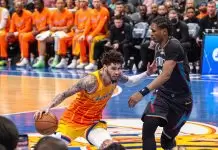
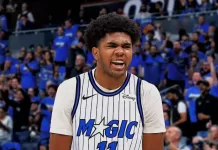
Windhorst noted that two of the top centers potentially available this summer, Jalen Duren and Walker Kessler, are restricted free agents. Their respective teams, the Detroit Pistons and Utah Jazz, have indicated a desire to retain them. Pursuing Kessler through an offer sheet could tie up cap space during a critical portion of free agency, while a sign-and-trade would require Los Angeles to surrender both assets and financial flexibility.
The uncertainty surrounding James further complicates matters.
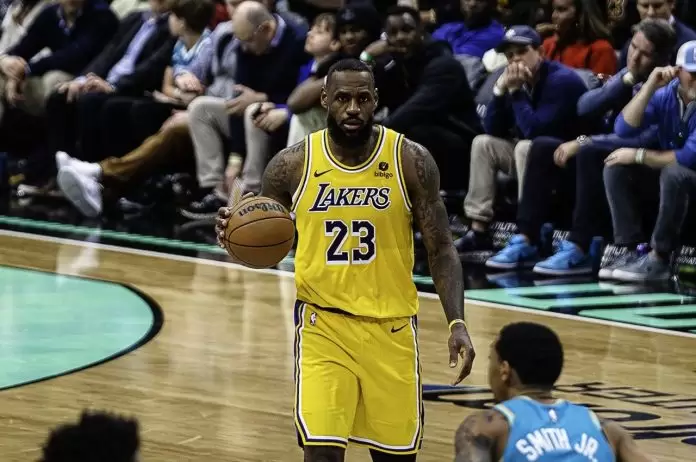
James is entering unrestricted free agency after averaging 20.9 points, 7.2 assists and 6.1 rebounds in 60 games during his age-41 season. While teams such as the Golden State Warriors and Cleveland Cavaliers have been mentioned as potential suitors, financial limitations around the league make a Lakers return appear plausible.
MORE FOR YOU
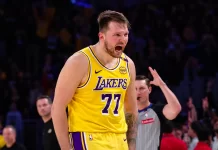
According to Windhorst, many rival executives believe the most realistic outcome is James returning on a contract below his previous salary, which exceeded $50 million annually. Such a move would allow the Lakers to preserve cap room while keeping one of the league’s most productive veterans alongside Luka Doncic.
The Lakers are also expected to prioritize Austin Reaves. After averaging a career-best 23.3 points, 5.5 assists and 4.7 rebounds while shooting 49.0% from the field, Reaves is projected to command a contract worth more than $40 million annually. Multiple teams, including Brooklyn, are reportedly preparing aggressive offers.
Los Angeles could preserve flexibility by carrying Reaves’ cap hold while pursuing other moves before finalizing a new contract. Even so, retaining him addresses continuity more than roster improvement.
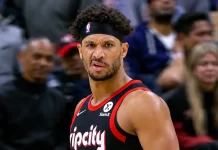
The organization has already explored ways to create additional flexibility. Reports have linked Dalton Knecht and Jarred Vanderbilt to trade discussions, with both viewed as movable contracts that could help reshape the roster around Doncic.
Ultimately, the Lakers’ challenge is not simply creating cap space. It is finding a way to improve a 53-win team while retaining key contributors and addressing frontcourt needs in an increasingly competitive Western Conference.
With Doncic in his prime, new ownership willing to spend, and a proven core already in place, Los Angeles is far from a rebuilding team. But as Windhorst noted, the Lakers’ cap space may be more “phantom” than transformational, making this one of the most complicated offseasons the franchise has faced in years.