
The 2026 NBA postseason has already moved past theory and into punishment. As of May 6, Detroit leads Cleveland 1-0, New York leads Philadelphia 1-0, Oklahoma City leads the Lakers 1-0, and Minnesota leads San Antonio 1-0 in the conference semifinals. The NBA playoff braket now looks less like a clean ladder and more like a daily stress test: 60-win Detroit survived Orlando in seven, Philadelphia knocked out Boston in seven, and the Lakers needed six games to get through Houston.
The Bracket Stopped Being Polite
An NBA playoff bracket predictor looked neater on April 18, before Orlando took two of the first four games from Detroit and before Philadelphia dragged Boston into a Game 7 on May 2. Detroit’s 60-22 regular season record gave it the East’s No. 1 seed, but the Magic still forced a 4-3 series before the Pistons closed Game 7 by 22 points. Oklahoma City’s 64-18 record held better under pressure, with four wins over Phoenix by margins of 35, 13, 12, and 9. That sweep matters because rest, not style points, often shows up in the second round.
Detroit Found Its Teeth Late
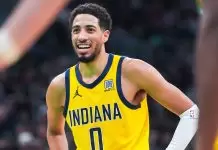
Detroit’s 111-101 win over Cleveland on May 5 came from pressure that showed up on the stat sheet: 19 Cavaliers turnovers and 31 Pistons points off those mistakes. Cade Cunningham finished with 23 points and 7 assists, Tobias Harris added 20 points and 8 rebounds, and Jalen Duren closed the game with three dunks during an 18-8 finishing run. One small note from the final minutes mattered: Cleveland’s spacing shrank when Detroit loaded the nail and pinched the ball handler before the second pass. The Pistons did not just defend harder; they pushed the Cavaliers into late-clock decisions.
Oklahoma City Made the Lakers Look Old
Oklahoma City’s 108-90 Game 1 win over the Lakers was not built on an avalanche from Shai Gilgeous-Alexander, which makes the result more uncomfortable for Los Angeles. Chet Holmgren had 24 points and 12 rebounds, Ajay Mitchell scored 18, and the Thunder bench beat the Lakers bench 34-15. The fourth quarter had a small but telling swing when Jared McCain hit back-to-back threes, turning a workable deficit into one LeBron James’ 27 points could not cover. Quietly, the Lakers posted their lowest playoff point total since 2021.
Data Has Replaced Guesswork
The current NBA playoff scenarios are being decided by possession math as much as star reputation: turnover rate, corner-three volume, foul pressure, and whether a team can keep its rim protector out of foul trouble. Bettors tracking this postseason are watching lineup data in shorter windows now, especially after Minnesota beat San Antonio 104-102 despite Victor Wembanyama blocking 12 shots. That is why comparison across all betting apps often centres on live market speed, injury updates, cash-out timing, and alternate spreads rather than a single pregame line. The better read usually comes after the first substitution pattern, when coaches reveal whether they trust an eight-man rotation or need a ninth body for two defensive possessions.
Wembanyama Changed the Geometry
Victor Wembanyama’s 12-block game against Minnesota on May 4 set a single-game NBA playoff record in the play-by-play era, but San Antonio still lost 104-102. That is the cleanest warning sign in the West: one historic defensive performance cannot fix 5-for-17 shooting from the field or a missed Julian Champagnie three at the buzzer. Minnesota survived because it kept enough bodies moving around the lane, and Julius Randle gave it a physical release valve when the first action stalled. Two points. That is the whole file.
The Phone Became Part of the Rotation
The NBA playoff predictor conversation now lives on second screens during every timeout, with fans refreshing shot charts, possession logs, injury reports, and series odds before the broadcast returns from commercial. This is not passive scrolling; it is how viewers follow a Game 2 adjustment before it becomes obvious on the scoreboard. For live betting, MelBet fits into that routine as a mobile layer for checking basketball markets, odds movement, and in-play prices while the game is still changing possession by possession. Sensible use still depends on limits, bankroll control, and understanding variance, because a 7-0 run at Madison Square Garden can look larger on a phone than it really is.
No Cushion Left
New York’s 137-98 Game 1 win over Philadelphia looked decisive, but the 76ers already proved against Boston that a series can turn after a 32-point loss in Game 1. San Antonio has the same lesson in front of it after Wembanyama’s record night ended in a two-point defeat, while Cleveland has to clean up 19 turnovers before Game 2 in Detroit on May 7. The margins are thin enough that one missed corner rotation, one offensive rebound, or one coach leaving a cold shooter in for 94 seconds can change the NBA playoff race. The next possession is already too late.