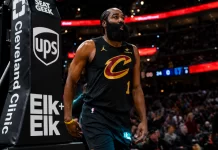

J.B. Bickerstaff walked into his postgame press conference frustrated by the ending, but not discouraged by the overall effort.
The Detroit Pistons coach spent much of Saturday night watching his team battle back against the Cleveland Cavaliers before three late turnovers and a series of defensive breakdowns turned Game 3 into a 116-109 loss at Rocket Arena.
Detroit still leads the Eastern Conference semifinal series 2-1, but Bickerstaff made it clear afterward that the Pistons let a winnable game slip away.
“Our defense is so stingy if we get you in the half court,” Bickerstaff said. “So we just got to make sure we get shots on goal so that we can set our defense and make people have to work through it.”
The Pistons committed 16 turnovers, and Cleveland converted them into 27 points. The biggest mistakes came in the final three minutes, including Max Strus’ steal near midcourt that led to the go-ahead layup.
Cade Cunningham finished with 27 points, 10 rebounds and 10 assists, but he also had eight turnovers. Bickerstaff pointed to Cleveland’s increased ball pressure late in the game while also emphasizing collective responsibility.
“They picked up their pressure obviously,” Bickerstaff said. “But again, that’s too many turnovers for us as a group. Sixteen is too many.”
MORE FOR YOU
Detroit struggled offensively in the first half before finding rhythm after halftime. Bickerstaff believed the process remained solid throughout the game even when shots were not falling.
“I think the first half we got great looks,” Bickerstaff said. “We got open shots that just didn’t fall for us. We continued to do that in the second half. And the shots started to fall for us.”
The Pistons nearly flipped the game during a strong third-quarter run fueled by defensive energy and offensive rebounding. Detroit grabbed 17 offensive rebounds overall, continuing one of the team’s biggest strengths throughout the postseason.
“We do a great job attacking the glass on both ends,” Bickerstaff said. “That’s what we want to do to help us win those possessions.”
The coach repeatedly returned to Detroit’s defensive spacing problems when explaining how Cleveland created cleaner driving lanes late in the game.
“They started to attack switches more, and then their guys went to more of their iso game,” Bickerstaff said. “We just got to do a better job being in position to help one another.”
Bickerstaff added that Detroit’s defenders stayed too attached to Cleveland shooters instead of shrinking the floor.
“We were just a little hugged up to our man too much because of their ability to shoot,” Bickerstaff said. “And we just didn’t do a better job of being in tighter.”
One bright spot for Detroit came from reserve forward Paul Reed, who scored 11 points in 10 minutes and provided energy during the comeback push. Bickerstaff explained why Reed earned extended trust while Isaiah Stewart disappeared from the second-half rotation.
“I just thought at that moment what we needed is what P Reed provides,” Bickerstaff said. “He provides that spark, that instant impact to make plays, whether it’s defensively or offensively.”
Bickerstaff also praised Reed’s ability to change momentum when Detroit needed energy.
“When you’re down he’s a guy you can go to that can raise the energy,” Bickerstaff said. “I thought he did a great job of that again tonight.”
Even after the loss, the Pistons coach sounded confident that Detroit can respond in Game 4. He believes the comeback stretch during the third quarter gave the team useful adjustments moving forward.
“Oh for sure,” Bickerstaff said when asked whether the Pistons can build on that run. “I thought we did a lot of good things to get back in the game, especially with our defense, forcing some more turnovers and those types of things.”
Game 4 will be Monday night in Cleveland, where the Cavaliers will try to even the series and the Pistons will try to regain control before heading back to Detroit.