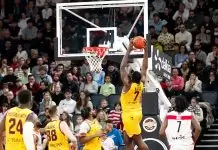


Basketball and casino games live on the same fuel: pace, pressure, and feedback. One delivers the drama through a 24-second possession, the other through a spinning wheel, a dealt card, or a flashing bonus meter.
Designers now borrow sports thinking to keep players engaged without letting sessions drift into boredom. A roulette odds calculator can feel like the casino version of a scouting report, because it turns a hunch into a clear, checkable number. That mindset fits modern game studios, since the best products today explain risk fast and reward attention even faster.
Basketball’s biggest design lesson is simple: people stay focused when the action has a rhythm. The NBA learned that in 1954, when Syracuse Nationals owner Danny Biasone and executive Leo Ferris pushed the league toward the 24-second shot clock to stop stalling and revive scoring. Casino designers chase the same effect when they shorten dead time, speed up re-bets, and make results easier to read at a glance.
Online casinos also learned to package games the way broadcasts package a big matchup. Roulette77, for example, often presents roulette tables inside “lobbies” that feel closer to a sports hub than a quiet card room, using quick stats, table labels, and easy navigation to keep decision time low and momentum high.
Scoreboards, Streaks, and Feedback Loops
Basketball fans love the scoreboard because it tells the story instantly: who leads, how much time is left, and what a team needs next. Casino games copy that clarity with balance displays, recent results, and “quick math” features that reduce guesswork.
The Hot Hand, Runs, and Streak UI
Basketball has a famous psychological trap called the “hot hand,” where fans believe a shooter is guaranteed to keep scoring because the last few shots fell. Players bring that same belief to roulette histories and recent-number panels, even though each spin stays independent.
Design can either feed that confusion or reduce it. The best UIs keep history visible but avoid implying that history predicts the future. Clear labels like “previous results” matter more than flashy streak graphics, because they frame the information honestly.
A few basketball-inspired mechanics show up again and again in modern casino design:
- Fast “at-a-glance” info blocks that resemble a scoreboard
- Progress bars that feel like a game clock counting down to a moment
- Celebrations that mirror arena hype, kept short so they do not slow play
- Leaderboards and missions that echo season standings and stat races
- Replays and hand histories that act like highlight clips for your session
That style works best when it stays respectful of risk. A dunk highlight does not cost the viewer money, but a casino “highlight” can tempt a player to chase a feeling.
| Basketball broadcast feature | Why it works for fans | Casino UI cousin |
| Score bug (score + clock always on screen) | Constant context, low confusion | Always-visible balance and bet summary |
| Shot chart overlays | Shows patterns fast | Coverage visuals for roulette bets (what you’re actually covering) |
| Instant replay | Explains what just happened | Hand history / spin history with simple explanations |
| Player comparison graphics | Makes choices feel informed | Odds and payout quick views to compare bet types |
| Momentum segments (“run” trackers) | Builds drama, frames swings | Session summaries that show swings without implying prediction |
Analytics Culture: Moneyball Meets House Edge
Basketball’s analytics boom changed how teams think and how fans talk. Dean Oliver’s “Four Factors” gave media and front offices a common language, and executives like Daryl Morey turned data into everyday strategy rather than a niche hobby. Casino design absorbed that same cultural shift: modern players expect numbers, transparency, and tools that help them understand decisions.
What Advanced Stats Taught UI Designers
Analytics matters because it turns a messy reality into a few signals people can actually use. A casual fan does not need every SportVU coordinate to grasp why “corner threes are efficient,” just as a casual roulette player does not need advanced math to understand payouts, probability, and risk.
The best casino tools borrow a familiar logic from sports dashboards and apply it to gambling decisions:
- Show the key stat first (the number most people need right now).
- Keep the deeper layer optional (detail on demand, not forced).
- Explain in plain language (no jargon that blocks understanding).
A roulette calculator follows that model when it starts with payout and hit chance, then adds deeper context such as coverage count, implied volatility, or expected value. Basketball fans learned to interpret true shooting percentage and points per possession because those stats answer practical questions quickly. Casino players can learn the same kind of “fast reading” through bet types, payout ratios, and the critical difference between a possible win and a likely outcome.
The most valuable crossover is transparency about uncertainty. Even Stephen Curry’s hottest night does not guarantee the next three will fall, and even a “clean-looking” roulette history does not make the next result more predictable. Good tools state that clearly, because honest framing protects players and builds trust.
US audiences often carry a sports-fan mindset into casino products: they like numbers, quick tempo, and a storyline they can follow. Modern design can deliver that experience without pretending the house edge vanishes. Responsible play features – session limits, reality checks, and break reminders – matter even more in a country where gambling rules and age limits differ by state and venue.
Basketball showed designers how to keep attention high without losing clarity. Casino games adapted the lesson into experiences that feel like a well-produced matchup: strong context, faster decisions, and controlled bursts of excitement – so long as the data stays truthful and the player stays in control.