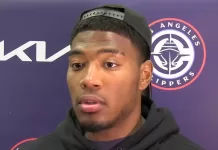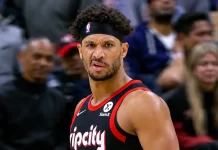

Jeff Van Gundy emphasized defensive fundamentals when addressing the media on Saturday ahead of the Clippers’ game against the New Orleans Pelicans.
“The biggest thing is to not beat yourself,” Van Gundy said, adding that transition defense, reckless fouling, and leaving the wrong guys open behind the three are common pitfalls. “The focus is always in those four areas … I would add defensive rebounding, too.”
On his working relationship with head coach Tyronn Lue, Van Gundy praised Lue’s approach. “He’s one of the most beloved people both as a player and as a coach that you could ever come across … he wants happiness and success for everybody.”
Van Gundy discussed Kawhi Leonard’s defensive role. “You don’t want to take the bat out of his hands ever … he’s every bit as capable as he’s always been defensively. It would be a poor choice if we didn’t keep the bat in his hand.”
He also reflected on the evolution of practice routines. “The interesting part about the NBA today is you rarely practice five on five … it’s just different. Poorly. Poorly. But that’s what I get. That’s where I learned from Ty.”
Addressing the Clippers’ frontcourt, Van Gundy highlighted Brook Lopez and Yanic Konan Niederhauser. “Zu [Ivica Zubac] was a huge part of our success … Brook has many of those same traits … now Yanic is learning and growing. He has to trust his feet, he’s good up higher in the pick and roll coverage.”
Van Gundy acknowledged the team’s defensive progress this season. “We’re faster now … Kris Dunn playing more extended minutes helps your tenacity and anticipation. We’re not as good defensively in preventing makes, so we have to force turnovers.”
MORE FOR YOU
On his unofficial role as defensive coordinator, he added, “I try to help where I can … when you’re old like me, you’ve seen a lot of change, but you also recognize that so many things stay the same. What wins and what loses.”
He stressed the importance of mental balance for players. “They don’t give themselves grace for misses … averages are average for a reason. You’re going to miss 62 out of 100 threes. The overreaction to the misses hurts players … we try to help them be more even-keeled through the tough stretches.”