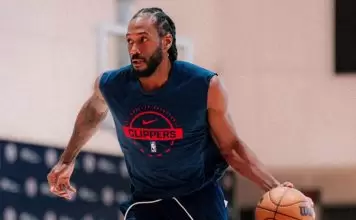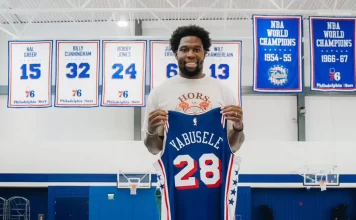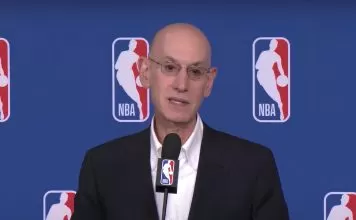


There are two ways to see crypto’s footprint on the NBA. Stand on Figueroa Street in Los Angeles and look up at the giant logo above the Lakers’ home arena, the result of a $700 million naming rights deal that remains the most valuable in the history of professional sports. Or read the FBI’s October 2025 indictment, the one that put Portland Trail Blazers head coach Chauncey Billups and Miami Heat guard Terry Rozier on immediate league leave and arrested 34 people across 11 states.
Both stories belong to the same conversation.
The visible layer of crypto in the NBA has been growing for half a decade now, with arena naming rights, jersey patches, league-wide partnerships, and player endorsements that have rewired the sponsorship landscape. The underground layer, the part that does not show up on broadcast graphics, has been moving in parallel.
The Visible Layer: How Crypto Bought Its Way Into NBA Real Estate
The numbers tell most of the story.
In 2021, crypto sponsorship spending in the NBA went from less than $2 million to roughly $130 million in a single season, according to IEG figures. The category leapt from 43rd in NBA sponsorship spending to second, behind only technology. Crypto.com signed the Staples Center renaming deal that December. FTX took the Miami Heat arena. Coinbase signed a four-year league agreement worth $192 million. Webull put its name on the Brooklyn Nets jersey patch for $30 million per season.
Then FTX collapsed in November 2022, the Heat arena lost its name, and the deals that survived suddenly looked like the more carefully chosen ones.
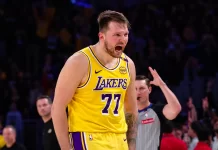
Crypto.com Arena did not just survive. It opened the 2025-26 season in October 2025 with a new general manager and a completed nine-figure renovation. The Lakers, the Kings, the Sparks, and decades of championship banners still call it home. Five years into a twenty-year deal, the building has become the most permanent crypto landmark in American team sports.
For the league’s broader commercial and competitive picture, the sponsorship landscape has shifted around it but the core crypto presence has not.
The October 2025 Reckoning
The other story arrived on October 23, 2025.
Federal prosecutors in Brooklyn unsealed two indictments, dubbed Operation Nothing But Bet on the betting side. Thirty-four people were arrested across 11 states. The headline names belonged to Billups, Rozier, and former player and assistant coach Damon Jones.
The allegations split into two schemes.
The first is sports betting. Rozier allegedly tipped off associates that he would leave a March 2023 game early due to a faked injury, letting them place over $200,000 in bets on his underperformance. The second is poker. Billups and Jones allegedly used their celebrity to lure wealthy players into rigged Mafia-backed games, with altered shuffling machines and pre-marked cards delivering the outcomes the house wanted.
Damon Jones has since become the first defendant to plead guilty, admitting in court to feeding inside information to gamblers and helping organise fixed games. Prosecutors are also expected to file additional charges against Rozier in the coming weeks.
U.S. Attorney Joseph Nocella called the betting case “one of the most brazen sports corruption schemes since online sports betting became widely legalised.”
How Crypto Sportsbooks Fit Into This
The two stories overlap more than the casual fan might assume.
The same boom that put crypto on Lakers’ broadcasts produced the parallel wave of crypto sportsbooks and casinos now visible across global markets, with this overview covering many of the crypto gambling platforms still operating today.
Online sports betting expanded across the U.S. after the 2018 Supreme Court ruling that struck down PASPA. Crypto sportsbooks grew alongside the regulated U.S. market, drawing players who wanted faster withdrawals, lighter verification, and wider prop markets. The same prop markets, in other words, that the Operation Nothing But Bet investigation says were exploited with insider information.
Player props are the part of a game where insider information is most valuable.
The Rozier case is built around exactly that mechanic. A bettor with advance knowledge that a starter will leave early can place targeted prop bets that automated risk monitoring would not catch. The difference between crypto and traditional sportsbooks here is not the technology, but the regulatory floor each operates above.
What the League Is Doing
The NBA’s response has been part procedural and part rhetorical.
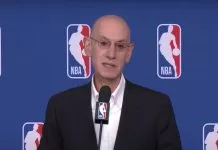
Billups and Rozier were placed on immediate leave. Tiago Splitter took over the Trail Blazers as interim head coach. Adam Silver acknowledged on Pat McAfee’s show that federal authorities have stronger investigative resources than the league does, and the Commissioner has signalled a wider review of integrity protocols. The ESPN report on the indictments and arrests lays out the league’s full statement and the cooperation framework.
The harder questions are the ones the league cannot solve through public statements. The case stems directly from the Jontay Porter scandal, in which the Raptors center was banned in 2024 for manipulating his own performance for prop bets. The NBA had previously cleared Rozier after a 2023-24 internal review. The federal indictment now lays out information the league either did not have or did not act on.
For readers following the Trail Blazers’ coaching situation and other team analysis, the on-court impact has been immediate. The off-court impact is going to last much longer.
The Long View
Crypto did not cause the NBA’s gambling scandal. The Mafia did, with help from people who were already inside the league.
But the visibility of crypto in NBA sponsorship and the fast growth of crypto sportsbooks during the same period have made it almost impossible to talk about one story without the other. Five years into Crypto.com Arena, the building stands as a marker of how completely the category has settled into the league. The October 2025 indictments stand as a reminder of how much work remains around the games rather than during them.
The next five years will define which of those two narratives ends up doing more shaping.