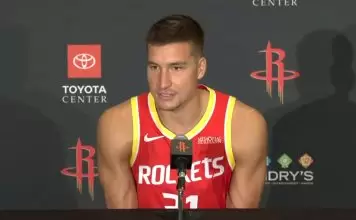


There are players who talk about defense and players who define it. Rudy Gobert has spent the better part of a decade in the second category, and in a season where the Minnesota Timberwolves’ inconsistency has been a persistent source of frustration, his presence on the floor remains the clearest dividing line between a team that can compete and one that cannot. Speaking candidly with RG.org following back-to-back blowout losses to the Los Angeles Lakers and Los Angeles Clippers, Gobert was measured, accountable, and direct, the same qualities that have made him one of the most decorated defenders in the modern era of the sport.
The Wolves enter the final stretch of the regular season sitting sixth in the Western Conference at 40-26, a record that reflects both their capability and their ceiling problem. They have strung together multiple winning streaks and matched them with losing streaks that erase momentum just as quickly as it builds. The tension between those two versions of the team runs through almost every conversation Gobert is willing to have this season.
The DPOY Case: Numbers That Are Difficult to Argue With
Timberwolves coach Chris Finch did not choose gentle language when describing what Gobert means to Minnesota’s defense. He called Gobert’s current campaign, by far, the best Defensive Player of the Year effort in the league, a statement made all the more striking given that Gobert has already won the award four times (2018, 2019, 2021, 2024). The numbers support the argument. Minnesota’s defensive rating with Gobert on the floor sits at 113.7. Without him, that number climbs to 121.8, a gap of eight points that represents the difference between an elite defensive unit and a liability.
Finch was equally direct about what separates Gobert from every other defender in the league: the ability to anchor a defense regardless of who is playing alongside him. Mistakes happen in every game. Bad defensive possessions accumulate. Gobert, according to Finch, is capable of covering for those mistakes in a way that no other center in the NBA can replicate. That is not a stylistic edge — it is a structural one. The Wolves can put Gobert in virtually any defensive situation and trust that the floor will not fall out from underneath them.
“When we do that, we end up playing better offensively. Because even if that’s not focused on the offense, we’re not as focused on if shots go in or they don’t go in. We’re just playing with flow and competing with defense.” — Rudy Gobert, via RG.org
Wembanyama: Competing Against a Friend for the Game’s Highest Defensive Honor
The most compelling element of this year’s DPOY race is that Gobert’s primary competition comes from Victor Wembanyama, the San Antonio Spurs’ generational center and one of Gobert’s closest friends and teammates on the French national team. It is a dynamic that could easily breed tension, but Gobert has spoken about Wembanyama with nothing but genuine respect and warmth, and the affection appears entirely mutual.
What makes the matchup between them so fascinating is that they represent different archetypes of elite defensive centerdom. Gobert is the proven, battle-tested anchor, the player whose value is measured not just in blocks and steals but in the organizational certainty he provides every single night. Wembanyama is the disruptor, a uniquely terrifying physical specimen whose wingspan and instincts make him the most difficult player in the league to put a clean shot up against. Both cases are legitimate. The voters will have to weigh sustained, championship-caliber reliability against the jaw-dropping potential of the most physically gifted young player the position has ever seen.
Anthony Edwards and the Ceiling That Gobert Sees
Despite the Wolves’ inconsistency this season, Anthony Edwards has continued to grow into one of the most dynamic offensive players in the Western Conference. At 24 years old in his sixth NBA season, Edwards has made the kind of measurable leaps that suggest the best version of him is still ahead. Gobert, who has watched that development from the closest possible vantage point, has been thoughtful about what Edwards needs to do to reach the level his talent demands.
The thread connecting Gobert’s thoughts on Edwards to everything else he discussed with RG.org is the same one that runs through his postgame comments after the Wolves’ recent losses: it starts before game time. The preparation, the daily approach, the urgency that has to be present in every possession — these are not abstract concepts for Gobert. They are the specific practices that have allowed him to win four Defensive Player of the Year awards, even as the players around him have changed. If Edwards is going to become what Minnesota needs him to be, Gobert’s belief appears clear. He will need to find the same kind of relentless consistency that has defined the career of the man standing next to him in that locker room.