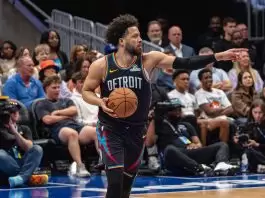
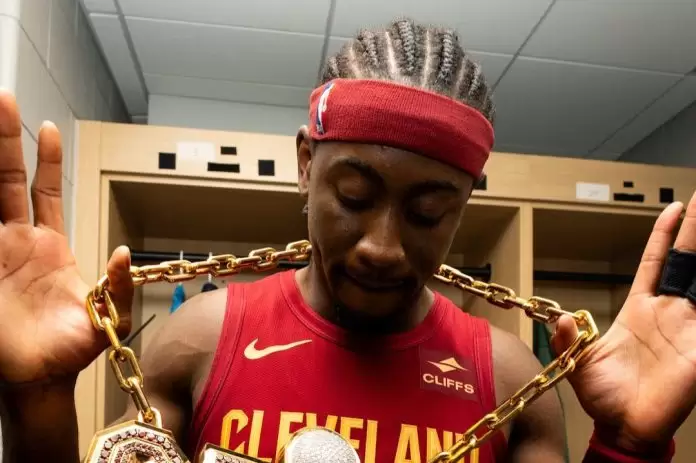
Every championship contender faces its defining moment, that stretch of the season where the team’s true character is put on full display. For the Detroit Pistons, that moment arrived with a gut punch on March 19, when MVP frontrunner Cade Cunningham went down with a collapsed lung after diving for a loose ball. In an instant, the Pistons’ Eastern Conference title hopes hung in the balance.
The timing couldn’t have been worse. Detroit had already stumbled through a rare four-game losing streak from March 3 to March 8, its first such skid of that length all season, including a bewildering home defeat to the Brooklyn Nets. The Boston Celtics were surging, and the Pistons’ grip on the Eastern Conference’s top seed was loosening by the day.
Yet something unexpected happened: the Pistons didn’t fold. They dug in, steadied themselves, and went 8-3 in their next 11 games. One win away from clinching the East’s top seed, the team looks nothing like one operating without its most important player. Much of that resilience traces back to a 31-year-old veteran who has quietly become the team’s backbone, Caris LeVert.
Preaching Preparation Before the Storm Hits
What makes LeVert’s impact so remarkable is that it predates Cunningham’s injury. Long before Detroit’s situation turned urgent, LeVert was already planting seeds of readiness across the locker room. His message to the team’s younger players was consistent and pointed: your moment is coming, so be prepared when it arrives.
Targets of that mentorship included Paul Reed, Tolu Smith, and developmental guard Daniss Jenkins, each of whom LeVert had been quietly coaching all season. In his view, opportunity without preparation is wasted potential. The veterans who flourish at the next level aren’t necessarily the most gifted; they’re the ones who treated every practice and every bench appearance as if a starting role might be waiting on the other side.
LeVert also acknowledged the psychological toll of being a talented young player in a winning environment. Fewer minutes, fewer possessions, fewer chances to make mistakes and grow, it’s a difficult tradeoff. But his perspective is clear: the short-term sacrifice pays long-term dividends for both the individual and the team.
Leading Without Demanding the Spotlight
Head coach J.B. Bickerstaff recognized LeVert’s value the moment the veteran arrived in Detroit. What stood out wasn’t just his on-court production; it was the understated way he carried himself. Bickerstaff noted that LeVert leads without imposing, allowing his actions to speak before his words ever do.
That approach resonates deeply in a locker room full of impressionable young talent. When players see a veteran arrive early, maintain his conditioning, and bring the same focus to a mid-February back-to-back as he would to a playoff game, it sets a standard that doesn’t need to be verbalized. LeVert understands this dynamic and intentionally leans into it.
For LeVert, credibility must be earned on the floor before it can be wielded in the huddle. Joining a new team means starting from scratch, regardless of résumé. His philosophy is to prove himself first through his play, then layer on mentorship, advice, and leadership conversations that come naturally from a place of demonstrated excellence.
A Decade in the Making
LeVert’s journey to becoming the kind of player Detroit is leaning on right now wasn’t linear. He has navigated injuries, roster changes, trades, and fluctuating roles across nearly ten years in the NBA. Each chapter added something, a skill, a perspective, a scar, that informs how he operates today.
That experience shows in the calmness he projects during adversity. Where younger players might panic in the aftermath of a star player’s injury, LeVert has been there before. He knows that teams don’t unravel because of one setback, they unravel when the response to that setback is poor. His presence in Detroit’s locker room seems to be preventing exactly that.
Now in the twilight of his prime, LeVert appears to have found the perfect role: a stabilizing force on a young, ambitious team with legitimate title aspirations. His evolution from a high-upside wing scoring threat into a veteran glue guy and mentor represents one of the more compelling late-career arcs in the league today.
What Comes Next
The Pistons remain cautiously optimistic about Cunningham’s timeline for return. A collapsed lung, while serious, is not typically a season-ending injury, and Detroit has been careful not to rush its franchise cornerstone back onto the court. In the meantime, the team has more than treaded water—it has thrived.
When Cunningham does return, he’ll rejoin a team that has been shaped by what LeVert started months ago, a culture of readiness, accountability, and shared purpose. The young players who have stepped up in his absence didn’t do so by accident. They were told to stay ready, shown what that looks like, and trusted to deliver when their moment arrived.
That’s the LeVert effect—quiet, steady, and increasingly impossible to overlook.