
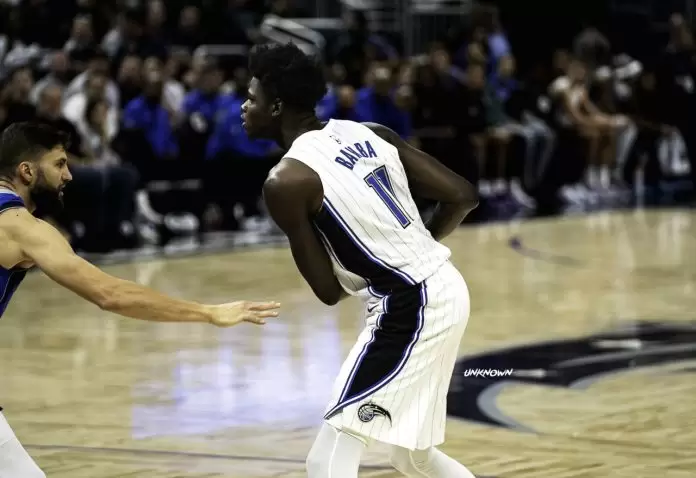
Only two players on standard contracts were waived ahead of the January 7 deadline: Tony Bradley and Mo Bamba.
Bradley’s $1,335,225 salary counted fully against the cap after his release, while Bamba’s $194,770 cap hit was much smaller due to his late signing date.
Both players were on minimum contracts, but their situations differed. Bradley had been with Indiana since before the season, whereas Bamba had joined Toronto just days earlier.
Bamba’s cap hit could be removed entirely if another team claimed him off waivers, though that would require guaranteeing his remaining salary.
Several other players with non-guaranteed or partially guaranteed deals were waived earlier in the season, resulting in modest dead-money figures.
Those included cap hits ranging from $70,732 for Jaden Springer to $1,000,000 for James Wiseman, whose later 10-day contracts pushed his total cap hit to $1,131,970.
On the two-way side, five players were waived before their January 10 guarantee date. Two-way salaries are worth roughly half the rookie minimum and do not count against the cap, reducing urgency for teams.
Even so, roster churn continued, leaving three open two-way slots league-wide with Atlanta, Milwaukee, and New York.
Across standard and two-way contracts alike, the numbers underline the same reality: January roster decisions are less about saving millions and more about controlling flexibility as the season enters its most volatile stretch.